Basement Waterproofing NJ: Complete Homeowner Guide for a Dry Basement

A wet basement rarely stays a basement problem for long. In New Jersey, moisture has a way of moving upward into the rest of the house, showing up as musty air, warped flooring, peeling paint, swollen trim, and that unmistakable smell that greets you at the bottom of the stairs. Sometimes the first clue is dramatic, like standing water after a storm. More often it starts quietly, a damp corner behind storage bins, white mineral deposits on the wall, or a dehumidifier that never seems to catch up.
That pattern is especially common here because New Jersey homes sit in a mix of old foundations, variable soil conditions, high water tables in some areas, and weather that swings from hard winter freezes to heavy spring rain and summer humidity. A basement can look sound for years and still have a moisture problem building behind finished walls or under the slab. That is why Basement Waterproofing NJ is not a one-size-fits-all service. The right fix depends on why water is getting in, how often it happens, what the foundation is made of, and whether the basement is unfinished, finished, or partly below grade with walkout access.
Homeowners often ask the same question: should I seal the inside walls, dig around the outside, install a sump pump, or start by fixing the gutters? The honest answer is that waterproofing works best when you treat the house as a system. Water follows the path of least resistance. If you only address the symptom you can spend good money and still end up with the same damp smell six months later.
Why New Jersey basements are especially vulnerable
In practice, basement water problems in New Jersey tend to come from a few overlapping conditions. Older homes in towns with historic housing stock may have stone or block foundations that were never designed to stay completely dry by modern standards. Mid-century houses often have block walls and aging footing drains. Newer homes can still have trouble if grading was rushed, discharge lines freeze, or the lot sits low relative to neighboring properties.
Soil matters more than many owners realize. Clay-heavy soils hold water and expand, which increases pressure against foundation walls after prolonged rain. Sandy soils drain faster, but they can also let water move quickly toward footing levels if the grading pushes runoff back to the house. In coastal and low-lying inland areas, groundwater can stay stubbornly high. Add a strong storm, snowmelt, or several days of steady rain, and hydrostatic pressure builds under and around the foundation. At that point water does not need a dramatic crack. It only needs a weak seam, a pipe penetration, the wall-floor joint, or porous concrete.
Finished basements raise the stakes. Drywall, laminate flooring, insulation, and stored belongings all absorb moisture quickly. I have seen basements where the owner thought a little seepage near the water heater was harmless, only to discover mold growth behind a fully finished wall ten feet away. Basement moisture is deceptive that way. The visible wet spot is not always the main entry point.
What “waterproofing” really means
The word gets used loosely. Some contractors use it to describe anything from a coat of masonry sealer to a full exterior excavation with drainage board and new footing drains. For homeowners, it helps to separate true waterproofing from moisture management.
A paint-on sealer can reduce vapor transmission through a wall, and it may improve appearance for a while, but it will not stop active water intrusion under pressure. Interior drainage systems do not technically prevent water from touching the outside of the wall, but they can be highly effective at collecting and redirecting water before it reaches the living space. Exterior systems attack the problem earlier, before water reaches the foundation wall, though they are more disruptive and expensive.
A reliable Basement Waterproofing NJ plan usually includes some combination of drainage control, water collection, mechanical pumping if gravity drainage is not possible, crack repair where appropriate, and humidity management after the water issue is corrected. It is rarely just one product.
The most common signs your basement needs attention
Homeowners often wait for puddles, but standing water is only one sign. A basement can be wet in ways that do not look dramatic. If the air feels clammy in summer, if cardboard boxes soften on the floor, if metal shelving rusts faster than it should, or if efflorescence appears on masonry, moisture is already part of the environment. Efflorescence, that chalky white residue on concrete or block, is not mold. It is a salt deposit left behind when water migrates through masonry and evaporates.
You may also notice dark staining at the cove joint where the wall meets the floor, hairline or stair-step cracks, or peeling paint on foundation walls. Finished basements sometimes show subtler clues first, like a baseboard that swells, a carpet tack strip that rusts, or a persistent odor that gets worse after rain. Condensation on cold water pipes can happen in any basement, but widespread condensation on ducts, windows, or walls usually points to a humidity issue that may be linked to water entry.
One of the more telling patterns is timing. If the basement gets damp only after heavy rain, surface runoff and exterior drainage are likely involved. If water appears during long wet periods even without obvious runoff, groundwater pressure may be the driver. If the problem is worst in summer, some of what you are noticing could be humid air condensing on cool surfaces rather than bulk water intrusion. Those distinctions matter because the fixes are different.
Where basement water usually comes from
The route water takes into a basement is often predictable once you understand the pressure around the structure. Surface water is the first suspect. Roof runoff that dumps beside the foundation, clogged gutters, downspouts that end too close to the house, and grade that slopes inward all load the soil around the basement wall with more water than it should hold.
Groundwater is the next major source. When the soil around and beneath a home becomes saturated, water pushes against the foundation and under the slab. This is where homeowners discover that concrete is not waterproof. It is porous, and joints are vulnerable. Water can enter through the cove joint, through shrinkage cracks, or right through masonry units.
Window wells create their own category of trouble. If a well fills during a storm and has no functioning drain, the window becomes a low point. The same goes for bulkhead entries, cellar doors, and stairwells that collect runoff. Plumbing leaks and HVAC condensation can add to the confusion. I have been in basements where owners were convinced they needed full perimeter waterproofing, only to find an uninsulated AC line sweating heavily and wetting the floor every humid afternoon. The opposite also happens, with a minor plumbing drip distracting from a genuine seepage problem behind a wall.
Start outside before you tear up the basement
Not every wet basement needs a major waterproofing system on day one. Some problems improve dramatically when the exterior water load is reduced. Before anyone drills concrete or opens walls, it makes sense to correct the basic water management issues around the house.
Here is a practical first-pass checklist:
- Clean gutters and confirm they are not overflowing at roof edges.
- Extend downspouts far enough to discharge well away from the foundation.
- Check grading for low spots that pitch water back toward the house.
- Inspect window wells, bulkhead drains, and basement entry drains for clogs.
- Remove dense plantings or edging that traps water against the wall.
These steps are not cosmetic. I have seen basements go from routine seepage to mostly dry after a proper downspout extension and regrading job. That said, “mostly dry” is not the same as waterproof. If groundwater pressure is high or if the footing drains have failed, exterior improvements may reduce frequency but not fully solve the issue.
Interior waterproofing systems and when they make sense
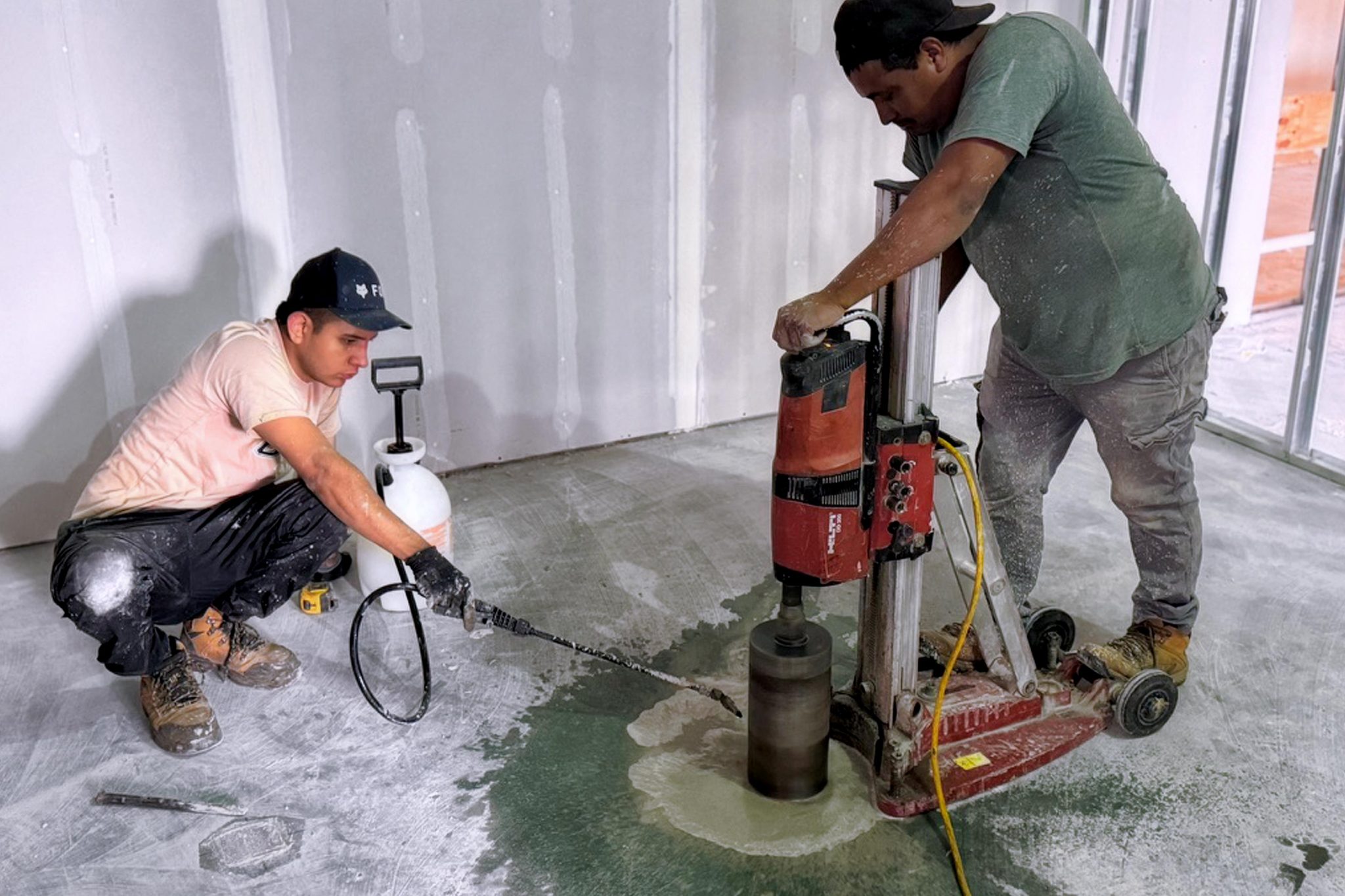
Interior systems are common in New Jersey because they are effective, less disruptive than excavation, and often the best answer when water is coming up at the slab edge or through the wall-floor joint. A typical setup involves opening a narrow channel around the inside perimeter, installing drainage alongside the footing, covering it with new concrete, and directing collected water to a sump basin. From there a pump discharges the water outside and away from the home.
Done well, this approach does not simply hide the problem. It manages water in a controlled way before it spreads across the basement floor. For many homes, especially those with block or poured concrete foundations and recurring seepage after rain, it is the most practical option. It is also commonly paired with a vapor barrier on the interior wall, particularly when the basement will be finished.
There are trade-offs. An interior system does not reduce the amount of water in the soil outside the wall. The wall can still get wet on the exterior face, and block walls in particular may need specialized treatment because water can collect in their hollow cores. A good contractor will explain whether wall drainage channels or weep access are needed so water inside the blocks can drain into the system rather than build pressure.
Sump pumps deserve more attention than they usually get. A cheap pump installed in a poor basin with no backup can turn a manageable water issue into a flooded basement during a power outage. In New Jersey, where strong storms can knock out electricity right when the pump is needed most, a battery backup or water-powered backup is not an upsell, it is risk management.
Exterior waterproofing, the more invasive but sometimes necessary fix
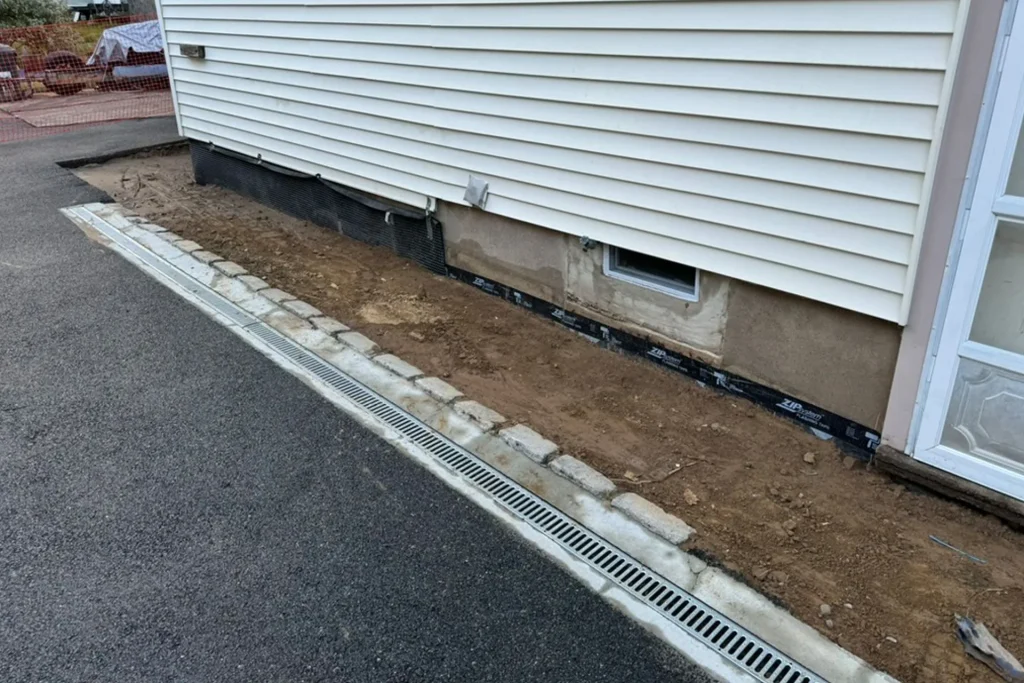
Exterior waterproofing addresses the source more directly. The contractor excavates down to the footing, cleans the wall, repairs cracks or voids, applies a waterproof membrane, installs drainage board, and often replaces or adds footing drains wrapped in stone and filter fabric. If the property allows for proper discharge, this can be a robust long-term solution.
It is especially valuable when the foundation wall itself is deteriorating, when there are significant exterior cracks, when water is entering above the footing level, or when you are already excavating for another reason such as foundation repair. It can also be the right move for homes with chronic leakage into finished spaces where owners want the driest possible envelope.
The downside is cost and disruption. Landscaping, walkways, decks, porches, and tight property lines can complicate the work quickly. On some New Jersey lots, particularly older urban or close-set suburban properties, full excavation along every wall is difficult or impossible without major site work. In those cases, targeted exterior repair on one trouble wall combined with interior drainage elsewhere may be the smarter blend.
Crack injections, sealers, and other targeted repairs
Not every wet basement calls for a perimeter system. A single active crack in poured concrete can sometimes be repaired successfully with polyurethane or epoxy injection, depending on whether the goal is to stop water, restore structural continuity, or both. Polyurethane is often used for active leaks because it expands and can remain flexible. Epoxy is more rigid and often chosen when structural bonding is part of the objective.
Masonry sealers have their place, but they are often misunderstood. They can help control vapor and improve the appearance of a wall after the real water issue has been addressed. They are not a substitute for drainage. If water is under pressure outside the wall, paint or sealer alone is unlikely to win that fight for long.
Window well drains, trench drains at basement entries, and localized regrading can be excellent targeted fixes when the problem source is obvious. The best contractors do not oversell full systems when a confined issue can be solved more simply. That kind of restraint is usually a good sign.
How professionals diagnose the real problem
A careful assessment should feel more like investigation than sales. The person evaluating the basement should ask when the water appears, how long it lasts, whether power outages have been part of the problem, and whether recent site changes altered drainage. They should look outside at roof drainage, slope, hardscapes, and neighboring properties, not just inside at the damp wall.
They should also distinguish among seepage, leakage, condensation, and plumbing sources. Thermal differences matter. So does seasonality. If a contractor spends five minutes in the basement, points at a stain, and immediately prescribes the same system they sell to everyone else, you have not learned much.
A good diagnosis often includes moisture meter readings, close inspection of cracks and cove joints, examination of the sump setup if one exists, and attention to air quality and relative humidity. If the basement is finished, there may be limited access, which is why the surrounding clues become so important. Smell, staining patterns, and weather history tell a story if you know https://sergiokwuf286.ironwoodscope.com/posts/how-basement-waterproofing-nj-helps-protect-stored-belongings how to read them.
Costs in New Jersey and what drives them
Pricing varies widely because basements vary widely. A straightforward crack injection may cost a small fraction of a full perimeter drainage system. A sump pump replacement is very different from an excavation project involving difficult access, masonry repair, and discharge line upgrades. In New Jersey, labor rates, disposal costs, permit requirements in some towns, and the complexity of tight lots all affect price.
Instead of chasing a single average number, focus on the factors that move cost up or down. Basement size matters, but not as much as wall access, groundwater conditions, and whether the work involves interior concrete demolition or exterior excavation. A finished basement can add labor because contents need protection and finishes may require removal and restoration. If the project includes a battery backup, dehumidification, structural crack repair, or discharge line trenching, those are separate value items that should be spelled out clearly.
One practical piece of advice: compare scopes, not just totals. A lower bid may exclude discharge extensions, wall vapor barriers, backup power, or concrete restoration details. I have seen homeowners choose the cheapest proposal and then spend the difference later on items that should have been included from the start.
Choosing a Basement Waterproofing NJ contractor without getting burned
Waterproofing is one of those trades where homeowners often have to make a decision under stress, usually after seeing water where they never wanted to see it. That urgency can make glossy promises sound more convincing than they are. The best protection is to slow the process down just enough to compare methods and ask plain questions.
When you meet contractors, pay attention to whether they explain why the water is entering and why their system fits that cause. Ask how they handle pump failure risk, whether they provide a written scope, what parts of the job carry warranties, and what maintenance the system requires. A long warranty is only meaningful if the company has a stable history and if the terms are specific.
These are the questions worth asking:
- What evidence tells you this is surface water, groundwater, condensation, or a mix?
- Why are you recommending interior drainage, exterior excavation, or a targeted repair?
- How will the system discharge water, and what happens during a power outage?
- What restoration work is included after installation?
- What maintenance should I expect over the next five to ten years?
Good answers are usually direct and unhurried. Vague claims like “our system works in every basement” should raise your guard. Basements are too variable for that kind of certainty.
Finished basements need a different level of planning
A finished basement changes the waterproofing conversation because you are not just preventing puddles. You are protecting insulation, framing, flooring, furniture, and air quality. If you are renovating a basement that has ever been damp, waterproofing should come before finishes, not after.
That usually means solving active water entry first, then thinking carefully about materials. Organic materials against masonry are risky in marginal basements. Even after a successful waterproofing job, a basement can still run more humid than upper floors. That argues for moisture-tolerant finishes, good air circulation, and a dehumidifier sized for the space. It also argues against wall-to-wall carpet in many cases.
One hard-earned lesson from the field: if the basement has had previous water problems, keep some visibility and access. Do not build everything so tightly that future inspection becomes impossible. A finished basement should not become a black box.
Maintenance is part of staying dry
Even a good waterproofing system needs occasional attention. Sump pumps wear out. Discharge lines clog or freeze. Gutter debris builds up. Window wells collect leaves. The basement that stayed dry for three years can surprise you in year four if the basics are ignored.
A short seasonal routine goes a long way. Test the pump before heavy rain seasons. Make sure the check valve is functioning. Confirm that discharge water is not returning toward the house or icing over near the foundation in winter. Keep the dehumidifier clean and draining properly. If your system includes battery backup, replace batteries on schedule rather than after they fail a test.
This is not glamorous homeownership, but it is cheaper than replacing drywall, flooring, and stored belongings.
When to act quickly
Some basement moisture issues can be monitored while you gather estimates. Others deserve immediate action. If you have standing water near electrical equipment, strong mold odor in a finished space, foundation wall movement, repeated pump failures, or water entering every time it rains, do not wait for a convenient season. The damage curve gets steeper once materials stay wet repeatedly.
For sellers, it is usually wiser to address a known water issue honestly than to paint over signs and hope no one notices. Buyers, inspectors, and appraisers are familiar with basement red flags, especially in New Jersey. A documented repair by a reputable contractor is often easier to deal with than an unresolved problem discovered late in a transaction.
A dry basement is not just about comfort. It affects storage, indoor air, resale confidence, and in many homes the usable living area that makes the square footage work. When homeowners approach Basement Waterproofing NJ with that bigger picture in mind, they tend to make better decisions. They stop looking for the fastest patch and start looking for the right system for their house, their lot, and the way water actually behaves on the property. That is the difference between temporary relief and a basement that stays reliably dry through the next hard rain, the next snowmelt, and the next humid New Jersey summer.
ARD Waterproofing
Address: 98 Smull Ave, West Caldwell, NJ 07006
Phone number: +12016465936
FAQ About Basement Waterproofing NJ
What is the best waterproofing method for a basement?
The best overall approach to waterproofing a basement is a combined exterior and interior system that stops water at the foundation wall and safely manages any moisture that gets through.
What is the average cost to waterproof a basement?
The average cost to waterproof a basement ranges from $2,500 to $15,000, with most homeowners paying around $5,200 for a complete project.
Can a basement be waterproofed from the inside?
Yes, a basement can be waterproofed from the inside, and it is often the most affordable and least disruptive method.